 本書提供附件下載


內容簡介
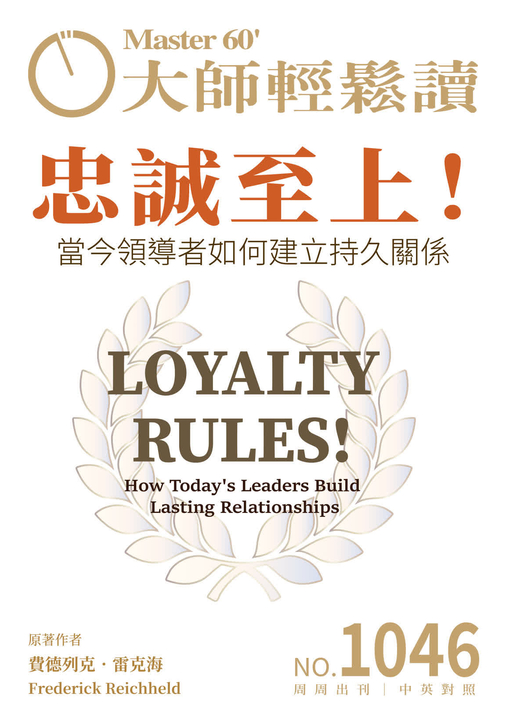
NO.1046 忠誠至上!|中英對照
當今領導者如何建立持久關係
LOYALTY RULES!
How Today's Leaders Build Lasting Relationships
原書作者:費德列克.雷克海(Frederick Reichheld)
★維京集團創辦人Richard Branson等名人推薦
★亞馬遜網路書店排行榜暢銷書
有些企業誤以為忠誠只是過去商業時代的遺跡,早已不合時宜。然而,忠誠不死!也從未被更好的東西所取代。
Some businesses have made the mistake of assuming loyalty is a relic of a bygone era of commerce. However, loyalty is not dead! Nor has it been superseded by something better.
當今領導者如何建立持久關係
LOYALTY RULES!
How Today's Leaders Build Lasting Relationships
原書作者:費德列克.雷克海(Frederick Reichheld)
★維京集團創辦人Richard Branson等名人推薦
★亞馬遜網路書店排行榜暢銷書
有些企業誤以為忠誠只是過去商業時代的遺跡,早已不合時宜。然而,忠誠不死!也從未被更好的東西所取代。
Some businesses have made the mistake of assuming loyalty is a relic of a bygone era of commerce. However, loyalty is not dead! Nor has it been superseded by something better.
章節目錄
Main Ideas 當今領導者如何建立持久關係How Today's Leaders Build Lasting Relationships
有些企業誤以為忠誠只是過去商業時代的遺跡,早已不合時宜。然而,忠誠不死!也從未被更好的東西所取代。
Some businesses have made the mistake of assuming loyalty is a relic of a bygone era of commerce. However, loyalty is not dead! Nor has it been superseded by something better.
Principle 1 雙贏──絕不損人利己 Win/Win – Never profit at the expense of others
想要建立忠誠的領導者,會透徹理解自身產業和專業領域的運作機制,制定保護事業夥伴利益的策略。關鍵不在讓競爭對手失敗,而在確保合作夥伴和供應商成為贏家。
Leaders who want to build loyalty use a thorough understanding of the dynamics of their industry and discipline to put together strategies that protect the interests of their business partners. The key is not to make sure competitors lose but to ensure partners and suppliers win.
Principle 2 選擇──讓參與成為一種殊榮 Selectivity – Make being involved in the business a privilege
忠誠領導者特別重視誰加入他們的團隊以及選擇與誰合作,因為這些選擇將充分展現公司的價值觀和原則,直接影響最終能產生的忠誠度。
Loyalty leaders are especially concerned about who is invited to join their team and who they choose to partner with because these choices will speak volumes about the firm's values and principles. They impact directly on the amount of loyalty that can ultimately be generated.
Principle 3 簡單──在忠誠與獎勵之間建立直接連結 Simplicity – Form direct links between loyalty and rewards
複雜是速度和靈活性的敵人。因此,忠誠領導者會抗拒朝這個方向發展的衝動,專注於關鍵原則和實踐,為顧客創造卓越價值。他們透過一套清晰而簡單的營運原則,建立忠誠。
Complexity is the enemy of speed and flexibility. Therefore, loyalty leaders resist the urge to drift in that direction by focusing on the key principles and practices which make a vital difference in creating superior value for the customer. They build loyalty with a clear and simple set of operating principles.
Principle 4 獎勵──讓獎勵匹配實際成果 Rewards – Match the rewards earned with the right results
高效領導者不以容易衡量的成果給予獎勵,他們是把獎勵與真正能提升顧客忠誠度的成果連結起來。獎勵尤其應該用來肯定超越標準的表現──亦即為顧客創造額外價值的卓越工作。
Instead of paying rewards on results that are easy to measure, effective leaders align rewards with results that are important to measure from a loyalty perspective. In particular, rewards should be triggered by over-achievement – exceptional work by people who are creating added value.
Principle 5 傾聽——發展雙向暢通的溝通機制 Listen – Develop responsive, two-way communication
提升忠誠度的關鍵不在更多的溝通,而在更好的溝通。如果企業文化缺乏信任,光靠引進新穎的溝通科技也無濟於事。忠誠是建立在有效溝通的4大要素之上:傾聽、學習、行動與闡釋。
The key to generating greater loyalty is not more communication but better communication. Simply layering new communications technologies over the top of a low-trust corporate culture won't work. Loyalty is based on the four components of effective communication: listening, learning, acting and explaining.
Principle 6 誠信——闡明原則,並以身作則 Integrity – Explain principles and preach what you practice
俗話說「說到做到」,忠誠領導者更進一步,他們以身作則,體現忠誠的原則,從而激勵他人。他們從不忘記,自己最主要的責任是成為好榜樣和導師。
The cliche says to "Practice what you preach". Loyalty leaders reverse that and inspire others by living and exemplifying the principles of loyalty. They never forget their primary responsibility is to be a good role model and a teacher.
Extended Reading 讓人願意追隨的領導 Leadership That Makes People Want to Follow
領導是一種處事的態度與技能,不只是為了善用技術與人才,更在於維持組織的活力,滿足利害關係人的需求,並激勵員工士氣、凝聚共識。
Leadership is more an attitude than a skill. It goes beyond the effective use of technology and talent—it's about sustaining organizational momentum, addressing stakeholder needs, and inspiring employees to invest themselves in a shared purpose.
有些企業誤以為忠誠只是過去商業時代的遺跡,早已不合時宜。然而,忠誠不死!也從未被更好的東西所取代。
Some businesses have made the mistake of assuming loyalty is a relic of a bygone era of commerce. However, loyalty is not dead! Nor has it been superseded by something better.
Principle 1 雙贏──絕不損人利己 Win/Win – Never profit at the expense of others
想要建立忠誠的領導者,會透徹理解自身產業和專業領域的運作機制,制定保護事業夥伴利益的策略。關鍵不在讓競爭對手失敗,而在確保合作夥伴和供應商成為贏家。
Leaders who want to build loyalty use a thorough understanding of the dynamics of their industry and discipline to put together strategies that protect the interests of their business partners. The key is not to make sure competitors lose but to ensure partners and suppliers win.
Principle 2 選擇──讓參與成為一種殊榮 Selectivity – Make being involved in the business a privilege
忠誠領導者特別重視誰加入他們的團隊以及選擇與誰合作,因為這些選擇將充分展現公司的價值觀和原則,直接影響最終能產生的忠誠度。
Loyalty leaders are especially concerned about who is invited to join their team and who they choose to partner with because these choices will speak volumes about the firm's values and principles. They impact directly on the amount of loyalty that can ultimately be generated.
Principle 3 簡單──在忠誠與獎勵之間建立直接連結 Simplicity – Form direct links between loyalty and rewards
複雜是速度和靈活性的敵人。因此,忠誠領導者會抗拒朝這個方向發展的衝動,專注於關鍵原則和實踐,為顧客創造卓越價值。他們透過一套清晰而簡單的營運原則,建立忠誠。
Complexity is the enemy of speed and flexibility. Therefore, loyalty leaders resist the urge to drift in that direction by focusing on the key principles and practices which make a vital difference in creating superior value for the customer. They build loyalty with a clear and simple set of operating principles.
Principle 4 獎勵──讓獎勵匹配實際成果 Rewards – Match the rewards earned with the right results
高效領導者不以容易衡量的成果給予獎勵,他們是把獎勵與真正能提升顧客忠誠度的成果連結起來。獎勵尤其應該用來肯定超越標準的表現──亦即為顧客創造額外價值的卓越工作。
Instead of paying rewards on results that are easy to measure, effective leaders align rewards with results that are important to measure from a loyalty perspective. In particular, rewards should be triggered by over-achievement – exceptional work by people who are creating added value.
Principle 5 傾聽——發展雙向暢通的溝通機制 Listen – Develop responsive, two-way communication
提升忠誠度的關鍵不在更多的溝通,而在更好的溝通。如果企業文化缺乏信任,光靠引進新穎的溝通科技也無濟於事。忠誠是建立在有效溝通的4大要素之上:傾聽、學習、行動與闡釋。
The key to generating greater loyalty is not more communication but better communication. Simply layering new communications technologies over the top of a low-trust corporate culture won't work. Loyalty is based on the four components of effective communication: listening, learning, acting and explaining.
Principle 6 誠信——闡明原則,並以身作則 Integrity – Explain principles and preach what you practice
俗話說「說到做到」,忠誠領導者更進一步,他們以身作則,體現忠誠的原則,從而激勵他人。他們從不忘記,自己最主要的責任是成為好榜樣和導師。
The cliche says to "Practice what you preach". Loyalty leaders reverse that and inspire others by living and exemplifying the principles of loyalty. They never forget their primary responsibility is to be a good role model and a teacher.
Extended Reading 讓人願意追隨的領導 Leadership That Makes People Want to Follow
領導是一種處事的態度與技能,不只是為了善用技術與人才,更在於維持組織的活力,滿足利害關係人的需求,並激勵員工士氣、凝聚共識。
Leadership is more an attitude than a skill. It goes beyond the effective use of technology and talent—it's about sustaining organizational momentum, addressing stakeholder needs, and inspiring employees to invest themselves in a shared purpose.
看更多
收起來
Main Ideas 當今領導者如何建立持久關係How Today's Leaders Build Lasting Relationships
有些企業誤以為忠誠只是過去商業時代的遺跡,早已不合時宜。然而,忠誠不死!也從未被更好的東西所取代。
Some businesses have made the mistake of assuming loyalty is a relic of a bygone era of commerce. However, loyalty is not dead! Nor has it been superseded by something better.
Principle 1 雙贏──絕不損人利己 Win/Win – Never profit at the expense of others
想要建立忠誠的領導者,會透徹理解自身產業和專業領域的運作機制,制定保護事業夥伴利益的策略。關鍵不在讓競爭對手失敗,而在確保合作夥伴和供應商成為贏家。
Leaders who want to build loyalty use a thorough understanding of the dynamics of their industry and discipline to put together strategies that protect the interests of their business partners. The key is not to make sure competitors lose but to ensure partners and suppliers win.
Principle 2 選擇──讓參與成為一種殊榮 Selectivity – Make being involved in the business a privilege
忠誠領導者特別重視誰加入他們的團隊以及選擇與誰合作,因為這些選擇將充分展現公司的價值觀和原則,直接影響最終能產生的忠誠度。
Loyalty leaders are especially concerned about who is invited to join their team and who they choose to partner with because these choices will speak volumes about the firm's values and principles. They impact directly on the amount of loyalty that can ultimately be generated.
Principle 3 簡單──在忠誠與獎勵之間建立直接連結 Simplicity – Form direct links between loyalty and rewards
複雜是速度和靈活性的敵人。因此,忠誠領導者會抗拒朝這個方向發展的衝動,專注於關鍵原則和實踐,為顧客創造卓越價值。他們透過一套清晰而簡單的營運原則,建立忠誠。
Complexity is the enemy of speed and flexibility. Therefore, loyalty leaders resist the urge to drift in that direction by focusing on the key principles and practices which make a vital difference in creating superior value for the customer. They build loyalty with a clear and simple set of operating principles.
Principle 4 獎勵──讓獎勵匹配實際成果 Rewards – Match the rewards earned with the right results
高效領導者不以容易衡量的成果給予獎勵,他們是把獎勵與真正能提升顧客忠誠度的成果連結起來。獎勵尤其應該用來肯定超越標準的表現──亦即為顧客創造額外價值的卓越工作。
Instead of paying rewards on results that are easy to measure, effective leaders align rewards with results that are important to measure from a loyalty perspective. In particular, rewards should be triggered by over-achievement – exceptional work by people who are creating added value.
Principle 5 傾聽——發展雙向暢通的溝通機制 Listen – Develop responsive, two-way communication
提升忠誠度的關鍵不在更多的溝通,而在更好的溝通。如果企業文化缺乏信任,光靠引進新穎的溝通科技也無濟於事。忠誠是建立在有效溝通的4大要素之上:傾聽、學習、行動與闡釋。
The key to generating greater loyalty is not more communication but better communication. Simply layering new communications technologies over the top of a low-trust corporate culture won't work. Loyalty is based on the four components of effective communication: listening, learning, acting and explaining.
Principle 6 誠信——闡明原則,並以身作則 Integrity – Explain principles and preach what you practice
俗話說「說到做到」,忠誠領導者更進一步,他們以身作則,體現忠誠的原則,從而激勵他人。他們從不忘記,自己最主要的責任是成為好榜樣和導師。
The cliche says to "Practice what you preach". Loyalty leaders reverse that and inspire others by living and exemplifying the principles of loyalty. They never forget their primary responsibility is to be a good role model and a teacher.
Extended Reading 讓人願意追隨的領導 Leadership That Makes People Want to Follow
領導是一種處事的態度與技能,不只是為了善用技術與人才,更在於維持組織的活力,滿足利害關係人的需求,並激勵員工士氣、凝聚共識。
Leadership is more an attitude than a skill. It goes beyond the effective use of technology and talent—it's about sustaining organizational momentum, addressing stakeholder needs, and inspiring employees to invest themselves in a shared purpose.
有些企業誤以為忠誠只是過去商業時代的遺跡,早已不合時宜。然而,忠誠不死!也從未被更好的東西所取代。
Some businesses have made the mistake of assuming loyalty is a relic of a bygone era of commerce. However, loyalty is not dead! Nor has it been superseded by something better.
Principle 1 雙贏──絕不損人利己 Win/Win – Never profit at the expense of others
想要建立忠誠的領導者,會透徹理解自身產業和專業領域的運作機制,制定保護事業夥伴利益的策略。關鍵不在讓競爭對手失敗,而在確保合作夥伴和供應商成為贏家。
Leaders who want to build loyalty use a thorough understanding of the dynamics of their industry and discipline to put together strategies that protect the interests of their business partners. The key is not to make sure competitors lose but to ensure partners and suppliers win.
Principle 2 選擇──讓參與成為一種殊榮 Selectivity – Make being involved in the business a privilege
忠誠領導者特別重視誰加入他們的團隊以及選擇與誰合作,因為這些選擇將充分展現公司的價值觀和原則,直接影響最終能產生的忠誠度。
Loyalty leaders are especially concerned about who is invited to join their team and who they choose to partner with because these choices will speak volumes about the firm's values and principles. They impact directly on the amount of loyalty that can ultimately be generated.
Principle 3 簡單──在忠誠與獎勵之間建立直接連結 Simplicity – Form direct links between loyalty and rewards
複雜是速度和靈活性的敵人。因此,忠誠領導者會抗拒朝這個方向發展的衝動,專注於關鍵原則和實踐,為顧客創造卓越價值。他們透過一套清晰而簡單的營運原則,建立忠誠。
Complexity is the enemy of speed and flexibility. Therefore, loyalty leaders resist the urge to drift in that direction by focusing on the key principles and practices which make a vital difference in creating superior value for the customer. They build loyalty with a clear and simple set of operating principles.
Principle 4 獎勵──讓獎勵匹配實際成果 Rewards – Match the rewards earned with the right results
高效領導者不以容易衡量的成果給予獎勵,他們是把獎勵與真正能提升顧客忠誠度的成果連結起來。獎勵尤其應該用來肯定超越標準的表現──亦即為顧客創造額外價值的卓越工作。
Instead of paying rewards on results that are easy to measure, effective leaders align rewards with results that are important to measure from a loyalty perspective. In particular, rewards should be triggered by over-achievement – exceptional work by people who are creating added value.
Principle 5 傾聽——發展雙向暢通的溝通機制 Listen – Develop responsive, two-way communication
提升忠誠度的關鍵不在更多的溝通,而在更好的溝通。如果企業文化缺乏信任,光靠引進新穎的溝通科技也無濟於事。忠誠是建立在有效溝通的4大要素之上:傾聽、學習、行動與闡釋。
The key to generating greater loyalty is not more communication but better communication. Simply layering new communications technologies over the top of a low-trust corporate culture won't work. Loyalty is based on the four components of effective communication: listening, learning, acting and explaining.
Principle 6 誠信——闡明原則,並以身作則 Integrity – Explain principles and preach what you practice
俗話說「說到做到」,忠誠領導者更進一步,他們以身作則,體現忠誠的原則,從而激勵他人。他們從不忘記,自己最主要的責任是成為好榜樣和導師。
The cliche says to "Practice what you preach". Loyalty leaders reverse that and inspire others by living and exemplifying the principles of loyalty. They never forget their primary responsibility is to be a good role model and a teacher.
Extended Reading 讓人願意追隨的領導 Leadership That Makes People Want to Follow
領導是一種處事的態度與技能,不只是為了善用技術與人才,更在於維持組織的活力,滿足利害關係人的需求,並激勵員工士氣、凝聚共識。
Leadership is more an attitude than a skill. It goes beyond the effective use of technology and talent—it's about sustaining organizational momentum, addressing stakeholder needs, and inspiring employees to invest themselves in a shared purpose.
 大師輕鬆讀 NO.784 拉住老顧客
 大師輕鬆讀 NO.767 熱絡關係
 大師輕鬆讀 NO.1049 信任的7大法則
 大師輕鬆讀 NO.858 換上顧客的腦袋
 大師輕鬆讀 NO.707 領導收放學
 大師輕鬆讀 NO.1057 變革領導力